Showing posts with label EMP attack. Show all posts

Saturday, January 12, 2013

7 actions to take immediately following an EMP strike


The threat of an Electromagnetic Pulse (EMP) strike on this country is a very well documented one, I have written about the threat in the past and have used information from the EMP Commission report which was published in 2004 in several of my articles.  Most recently I read an article published over on the Economic Collapse Blog which sums up nicely what impact an EMP strike would have on our country.
An electromagnetic pulse can range from a minor inconvenience to a civilization-killing event. It just depends on how powerful it is. But in the worst case scenario, we could be facing a situation where our electrical grids have been fried, there is no heat for our homes, our computers don’t work, the Internet does not work, our cell phones do not work, there are no more banking records, nobody can use credit cards anymore, hospitals are unable to function, nobody can pump gas, and supermarkets cannot operate because there is no power and no refrigeration. Basically, we would witness the complete and total collapse of the economy.
So what actions should you take immediately following an EMP strike?  Remember that time will be critical, the first few hours (days at most) will enable you to get a jump on everyone else and set the stage for your success.  You will immediately know that an EMP, be it from a nuclear weapon or massive solar flare, will have struck your area.  Your car will no longer work, your cell phone won’t work, the power will be out everywhere, planes will have fallen from the sky.  You will know it was an EMP but the vast majority of the public will not, they will be quite literally sitting around waiting for someone to tell them what to do.  You won’t know how large the scope of the strike is but you will have to assume the worst, which would be a nationwide outage.
First things first, if you are at work, get home.  Your boss no longer has authority over you, your co-workers no longer are a priority.  They will be trying to restart a computer that will never again work, trying to restart their smartphone, sitting in the break room trying to call 911 and saying things like: “This is ridiculous, I’m going to miss my 3pm sales call!”  You on the other hand will go to you car and change into the extra set of clothes and shoes you keep in the trunk.  You will don your “get home bag” and start walking, hopefully your walk will not take more than a day.
Once home it is time to start implementing your plan.  Remember time is absolutely critical and you only have a small window of it in order to set yourself up for success.  During these initial hours and days people will still have faith that some sort of government agency will come in to make everything better.  They will expect to see the power come back on any minute because someone will surely do something.  They will tell each other to sit tight, just hold on for a day or so because eventually the HMMWV’s will roll in loaded with supplies and some military officer or government official will explain that this is merely a temporary problem, nothing to worry about, sorry for the inconvenience.  You know better because you realize just how devastating an EMP strike is and the reality is that it could be months before systems start to come back online.  It will only take a week or two (at most) before things start getting really ugly because people start going hungry.  With all of that that in mind you take these 7 actions because you were prepared for this to happen.
1- Use your cash.  In the first few days after an EMP strike cash will still have value.  Take all of your cash and that radio flyer wagon your kids have and walk down to the corner store.  Avoid the big retail stores, I suggest finding the corner gas station or local drug store.  The owner of the store will no doubt be there, concerned that the items in the store are unprotected during a power outage.  Explain to the owner that you are in need of some supplies, can pay cash and do not require change.  Tell him/her that you will give them an extra $100 to allow you to “shop” for a few minutes.  Load up your wagon with anything you can find to include medication, candy bars, water bottles, pop tarts, lighters, hand sanitizer etc etc.  Of course you should be well stocked at home but you might as well get rid of your worthless paper money in exchange for any amount of extra supplies you can get your hands on.  In a week (maybe less) most stores will be completely looted so you need to take advantage of this moment.
2- Fill up the tub(s) with water.  Hopefully you have a water bob for each bath tub in your home in addition to several other water storage devices and water purification/filtration devices.  Remember a down grid means that fresh water will stop flowing to your home very quickly.  Fill up your tub as soon as you can, that extra hundred or so gallons could prove invaluable.  If you are concerned about the quality of the water remember you can add 8 drops of regular Clorox bleach per gallon to help purify what you have in the tub.
3- Talk to your neighbors.  This step is absolutely critical, you have to get out and talk to your close neighbors and explain to them what is going on.  They will be in denial for the most part, hopefully you have copies of the EMP report printed off which you can distribute as you go door to door.  Explain to them what is going on and that time is critical, let them know a worst case scenario means that there will be no help coming for quite a long time.  Additionally mention the following to them.
a. Discuss a neighborhood watch.  Tell them that in a few days or weeks things will get dangerous with hungry people roaming the streets.  It is essential that you define your neighborhood’s boundaries and set up a neighborhood watch of sorts, assigning people to different shifts.
b. Offer to hold a meeting.  Set a time that you will have a meeting at your home, say every day after sunrise in your garage.  Tell them they are invited and that every day you will be there passing out information.  At first you might not have anyone attend these meetings, in a few days there will be a handful and in a week you might have 50 or more hungry, scared, tired people demanding answers.  If you are going to assume the role of a leader, be prepared to do just that.
c. Tell them to use their cash.  Much like you should have already done, tell them that their cash will soon be worthless and that they need to get down to the market to spend it.  Most people have no cash on hand, so this probably won’t be a real issue.
d. Tell them to inventory their supplies.  Most people have 3 to 5 days food on hand in their home.  You should mention that they need to start rationing what they have, and taking inventory of everything else.
e. Start identifying those with skills.  I wrote about how to organize a survival community as well as what skills will be valuable after T-SHTF in a few recent articles  While making the rounds in your neighborhood you should start identifying who has special skills and make note of it.  Cops or military personnel could help with security, Doctors have obvious value, and so on and so forth.
4- Start rationing food.  Hopefully you have at least a 1 year supply of food for your family, if not more.  Start rationing immediately because more than likely you will have to share some of your food with your neighbors.  It will be unavoidable, you will need their help to survive as a community and there is absolutely no way that they will starve while watching you and your family live high on the hog.  This doesn’t mean that you cannot oversee how some rations are distributed, or seek out other sources of food, but just remember nobody gets through SHTF alone.
5- Hygiene preparations.  Consider where you are going to dispose of your human waste, it might be a good time to start digging that pit.  Also consider where you will dispose of your trash and if you will bury it or burn it.  Remember the trash man won’t be around next Sunday and your toilets will stop flushing very quickly.
6- Listen to your weather radio.  Prior to the EMP strike you had a small solar/hand crank weather radio secured in an old microwave in the basement, it still works.  You should monitor NOAA Weather Radio frequencies throughout the day in case there is information being published which you can use to stay informed.  Maybe the strike only covered 500 square miles and help will be on the way in a week, or maybe there is nothing but static…not a good sign.
7- Consider your own security plan.  Despite all of the actions you are taking, trying to help those within your community by reaching out to organize them, realize that not everything goes to plan.  There could be dissenters within your neighborhood or those outside of your community who might choose to take advantage of the situation.  Looting will become prevalent very quickly and no neighborhood will be immune.  Consider your security plan, this is no time to rely on the charity and goodness of mankind.  Remain suspicious of all activity and never walk around unarmed.  Never allow your family members to venture out alone and remember to stay in after dark.  All of that said I would caution against using deadly force unless absolutely necessary.  Protect yourself and your family but remember that there will come a time when the power does come back on and people will be held accountable for their actions.
An EMP strike on our nation will be an absolutely catastrophic event and while I’m sure all of us hope that something like this never happens, hope is never a course of action.   Despite our best efforts to prepare for such an event there is a good chance that many will not survive.  Some have predicted that within a year of a strike, 9 out of 10 Americans would be dead.  In sports success or failure on the field of play is determined months before the actual game by how much dedication the athletes displayed during practice.  In much the same way success or failure following an EMP strike will have been determined by how seriously we took our prep strategy in the months or years prior, as well as actions which we take immediately after.  Life isn’t fair, plan accordingly.

Original post @ http://www.prepper-resources.com/7-actions-to-take-immediately-following-an-emp-strike/

Thursday, December 13, 2012

ROCKET LAUNCH SIGNALING REAL-LIFE 'RED DAWN'?


WASHINGTON – North Korea’s apparently successful launch of a three-stage rocket with a range that could reach the United States has U.S. officials concerned about the Hermit Kingdom’s potential to launch an electromagnetic pulse, or EMP, attack.
North Korea is not assessed to be able to miniaturize a nuclear weapon to fit on a long-range rocket – at least not yet – even though it has an active nuclear weapons development program.
The concern over North Korea’s potential to develop the capability to launch an EMP attack is due to the country’s instability and isolation and the defiance it has shown – even to  close friends China and Russia. Beijing and Moscow have been unable to influence the behavior of North Korea’s leaders.

China already has expressed concern with North Korean officials over the launch, and the United Nations Security Council, on which China is a permanent member, already has condemned it.

After the North’s failed launch last April, the Security Council demanded that Pyongyang stop further launch attempts using what amounts to ballistic missile technology. North Korea has been a member of the U.N. since 1991.

Sources say that North Korea is steeped in symbolism, and the launch was to coincide with the one-year anniversary of the death of dictator Kim Jung Il, father of the current leader, 28-year-old Kim Jung Un. It also comes before the South Korean presidential election on Dec. 19 and Japan’s next general election scheduled for Dec. 16 to elect members of its parliament, or Diet.

The missile launched, the Unha-3, is a three-stage Taepodong-2 missile.

Its technology is a little better than North Korea’s nuclear weapons development, since the country is actually an exporter of missile technology to nations such as Iran, Syria, Libya and Egypt.

The success of the launch of its Taepodong-2 also may help bolster the potential for future missile sales. Informed sources say that representatives from the four Middle East countries were on hand for the latest rocket launch.

While the North Koreans said that the launch was to put a satellite into orbit, Western experts agree that the same technological know-how provides the capability to send a warhead as far as the United States.

With the knowledge of orbiting capability, experts say, such a power projection could could give North Korea the ability to reach even beyond California. An orbiting warhead could be placed anywhere and released on command to de-orbit and hit any location within the U.S.


Or, North Korea could explode an orbiting warhead in the atmosphere some 150 miles above a target, creating an electromagnetic pulse that could knock out the highly vulnerable grid system of the U.S.

Experts agree that such an EMP exploding high above Kansas, for example, would knock out a majority of America’s national grid system.

This scenario, which isn’t too far-fetched given the latest technical demonstration, recently was depicted in the popular movie “Red Dawn,” in which the North Koreans use an EMP to knock out the U.S. electrical grid system in the Northwest.

In the movie, the North Koreans knock out all electricity as well as all command and control and communications and the ability to detect such a threat.

With the help of the Russians, as shown in the movie, the North Koreans are able to stage a land invasion on the U.S.

For years, U.S. experts have expressed concern about the catastrophic impact of an EMP event either from a nuclear attack or a massive solar storm, as revealed in the comprehensive 2008 congressional report by the Commission to Assess the Threat to the United States from Electromagnetic Pulse (EMP) Attack. The EMP commission pointed out:

The electromagnetic pulse generated by a high altitude nuclear explosion is one of a small number of threats that can hold our society at risk of catastrophic consequences.
The increasingly pervasive use of electronics of all forms represents the greatest source of vulnerability to attack by EMP. Electronics are used to control, communicate, compute, store, manage, and implement nearly every aspect of United States (U.S.) civilian systems. When a nuclear explosion occurs at high altitude, the EMP signal it produces will cover the wide geographic region within the line of sight of the detonation.
This broad band, high amplitude EMP, when coupled into sensitive electronics, has the capability to produce widespread and long lasting disruption and damage to the critical infrastructures that underpin the fabric of U.S. society.
Because of the ubiquitous dependence of U.S. society on the electrical power system its vulnerability to an EMP attack, coupled with the EMP’s particular damage mechanisms, creates the possibility of long-term, catastrophic consequences. The implicit invitation to take advantage of this vulnerability, when coupled with increasing proliferation of nuclear weapons and their delivery systems, is a serious concern. A single EMP attack may seriously degrade or shut down a large part of the electric power grid in the geographic area of EMP exposure effectively instantaneously. There is also a possibility of functional collapse of grids beyond the exposed area, as electrical effects propagate from one region to another.
The launch is giving the North Koreans the ability to glean valuable information about launching an EMP to wreak havoc on the U.S. national grid system.

It also represents a serious U.S. intelligence failure of North Korean capabilities, according to informed sources. The failure comes in the surprise that such a launch had occurred, according to sources.

U.S. satellites had detected the possibility of a launch, but at one point the North Koreans stood down from launch preparations, claiming technical problems. But they had concealed last-minute launch preparations in what sources say was probably a serious North Korean deception and disinformation effort.

For years, it has been known to the U.S. intelligence community that the North Koreans are experts in the art of deception and concealment.

Experts believe that in addition to a new military capability, the launch was designed to give the North Koreans greater influence in diplomatic talks and to obtain more humanitarian assistance.

In a country in which vast numbers of the population are starving, the government has devoted its limited resources to ambitious missile and nuclear weapons programs. The effort gives the leadership greater leverage in future international discussions along with its symbolic value.

Officials also see the launch as a means for Kim Jong Un to consolidate his own power grip and display North Korea’s military capabilities.

North Korea today has a million troops opposite across the Demilitarized Zone, which isn’t far from South Korea’s capital of Seoul. There are some 34,000 U.S. troops sandwiched between the South Korean capital and the DMZ.

F. Michael Maloof, senior staff writer for the WND/ G2Bulletin, is a former security policy analyst in the Office of the Secretary of Defense. He can be contacted at mmaloof@wnd.com.


Monday, November 26, 2012

Electro Magnetic Pulse Effects & Preparedness

Although the US can improve prevention, protection, and recovery in the face of an EMP attack to levels below those that would have catastrophic consequences for the Nation, an EMP attack would still cause substantial disruption, even under the best of circumstances. Many citizens would be without power, communications and other services for days—or perhaps substantially longer—before full recovery could occur. During that interval, it will be crucial to provide a reliable channel of information to those citizens to let them know what has happened, the current situation, when help of what types for them might be available, what their governments are doing, and the host of questions which, if not answered, are certain to create more instability and suffering for the affected individuals, communities, and the Nation as a whole.

EMP and its effects were observed during the US and Soviet atmospheric test programs in 1962. Figure 1 depicts the Starfish nuclear detonation—not designed or intended as a generator of EMP—at an altitude of about 400 kilometers above Johnston Island in the Pacific Ocean. Some electronic and electrical systems in the Hawaiian Islands, 1400 kilometers distant, were affected, causing the failure of street-lighting systems, tripping of circuit breakers, triggering of burglar alarms, and damage to a telecommunications relay facility. In their testing that year, the Soviets executed a series of nuclear detonations in which they exploded 300 kiloton weapons at approximately 300, 150, and 60 kilometers above their test site in South Central Asia. They report that on each shot they observed damage to overhead and underground buried cables at distances of 600 kilometers. They also observed surge arrestor burnout, spark-gap breakdown, blown fuses, and power supply breakdowns.

What is significant about an EMP attack is that one or a few high-altitude nuclear detonations can produce EMP effects that can potentially disrupt or damage electronic and electrical systems over much of the United States, virtually simultaneously, at a time determined by an adversary.
Starfish Nuclear Detonation

 
Gamma rays from a high-altitude nuclear detonation interact with the atmosphere to produce a radio-frequency wave of unique, spatially varying intensity that covers everything within line-of-sight of the explosion’s center point.
The first component (E1) is a free-field energy pulse with a rise-time measured in the range of a fraction of a billionth to a few billionths of a second. It is the “electromagnetic shock” that disrupts or damages electronics-based control systems, sensors, communication systems, protective systems, computers, and similar devices. Its damage or functional disruption occurs essentially simultaneously over a very large area, as illustrated in the figure below.
Illustrative EMP Effects – Fast Pulse (Figure 2)
The middle-time component covers roughly the same geographic area as the first component and is similar to lightning in its time-dependence, but is far more geographically widespread in its character and somewhat lower in amplitude. In general, it would not be an issue for critical infrastructure systems since they have existing protective measures for defense against occasional lightning strikes. The most significant risk is synergistic, because the E2 component follows a small fraction of a second after the first component’s insult, which has the ability to impair or destroy many protective and control features. The energy associated with the second component thus may be allowed to pass into and damage systems.
The final major component of EMP is a subsequent, slower-rising, longer-duration pulse that creates disruptive currents in long electricity transmission lines, resulting in damage to electrical supply and distribution systems connected to such lines (Figure 3). The sequence of E1, E2, and then E3 components of EMP is important because each can cause damage, and the later damage can be increased as a result of the earlier damage. In the example depicted in Figures 2 and 3, about 70% of the total electrical power load of the United States is within the region exposed to the EMP event.
Illustrative EMP Effects – Slow Pulse Protection and Recovery of Civilian Infrastructures (Figure 3)

History professor William R. Forstchen discussed the potential damage rendered by an EMP (electromagnetic pulse) event, and what we can to do prepare for the possibility. There are actually two kinds of potentials for generating an EMP, military or solar, he explained. A nuclear fission weapon, such as Iran or North Korea are currently developing, that is detonated about 250 miles above the Earth’s atmosphere would trigger electrostatic discharge, striking the Earth’s surface and overloading the power grid and knocking it out, he detailed. The Soviets conducted an EMP test in 1962, and a power plant 500 miles away from the center of the detonation burst into flames, because of the EMP overload that fed into the transmission lines, he cited.

by DiscloseTruthTV

Just a few days ago, we were hit by the largest solar storm in five years, and NASA & NOAA have predicted a significantly increased solar storm cycle over the next 18 months, Forstchen noted. A large enough coronal mass ejection (CME) from the sun could generate a global-wide EMP event, particularly in the northern and southern latitudes. The “Carrington Event” of 1859 blew out telegraph lines, and the “energy output was so intense that railroad ties were bursting into flames,” he said. Forstchen advocates congressional action to protect America’s grid, such as put forth by Cong. Roscoe Bartlett.  

William R. Forstchen is a Professor of History and Faculty Fellow at Montreat College, in Montreat, North Carolina. He received his doctorate from Purdue University with specializations in Military History, the American Civil War and the History of Technology. His current book, One Second After was cited on the floor of Congress and before the House Armed Services Committee by Congressman Roscoe Bartlett (R.-MD), chair of the House Committee tasked to evaluate EMP weapons, as a realistic portrayal of the potential damage rendered by an EMP attack on the continental United States. 


William R. Forstchen


An electromagnetic pulse (commonly abbreviated EMP) is a burst of electromagnetic radiation. The abrupt pulse of electromagnetic radiation usually results from certain types of high energy explosions, especially a nuclear explosion, or from a suddenly fluctuating magnetic field. The resulting rapidly-changing electric fields and magnetic fields may couple with electrical/electronic systems to produce damaging current and voltage surges.
The mechanism for a 400 km high altitude burst EMP: gamma rays hit the atmosphere between 20–40 km altitude, ejecting electrons which are then deflected sideways by the Earth’s magnetic field. This makes the electrons radiate EMP over a massive area. Because of the curvature and downward tilt of Earth’s magnetic field over the USA, the maximum EMP occurs south of the detonation and the minimum occurs to the north.


In military terminology, a nuclear warhead detonated hundreds of kilometers above the Earth’s surface is known as a high-altitude electromagnetic pulse (HEMP) device. Effects of a HEMP device depend on a very large number of factors, including the altitude of the detonation, energy yield, gamma ray output, interactions with the Earth’s magnetic field, and electromagnetic shielding of targets.

Preparedness refers to the state of being prepared for specific or unpredictable events or situations. Preparedness is an important quality in achieving goals and in avoiding and mitigating negative outcomes. It is a major phase of emergency management, and is particularly valued in areas of competition such as sport and military science.
Methods of preparation include research, estimation, planning, resourcing, education, practicing and rehearsing.

Survivalism is a movement of individuals or groups (called survivalists or preppers) who are actively preparing for emergencies as well as possible disruptions in social or political order, on scales ranging from local to international. Survivalists often have emergency medical and self-defence training, stockpile food and water, prepare for self-sufficiency, and build structures that will help them survive or “disappear” (e.g. a survival retreat or underground shelter).

Anticipated disruptions include the following: Clusters of natural disasters, patterns of apocalyptic planetary crises, or Earth Changes (tornadoes, hurricanes, earthquakes, blizzards, solar storms, severe thunderstorms). A disaster caused by the activities of humankind (chemical spills, release of radioactive materials, nuclear or conventional war, oppressive governments). The general collapse of society caused by the shortage or unavailability of resources such as electricity, fuel, food, or water. Financial disruption or economic collapse (caused by monetary manipulation, hyperinflation, deflation, or depression). A global pandemic. Widespread chaos or some other unexplained apocalyptic event.

Thursday, November 1, 2012

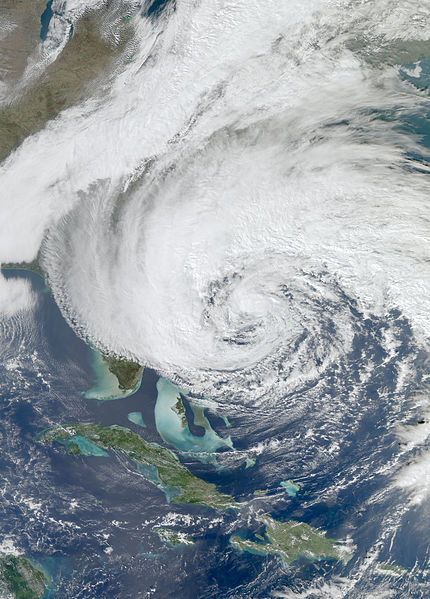
How To Prepare For A Hurricane? Some Lessons That Preppers Can Learn From Hurricane Sandy

Here's an article on how to prepare for a hurricane like Sandy. Time to think more about how we can prepare for 2012...

~~~~~~~~~~~~~~~~~~~~~~~~~
If you are just starting to prepare for Hurricane Sandy, the truth is that you are already too late.  Most of the essential supplies have already been stripped from store shelves.  If you don't have an emergency generator, you might be without power for quite some time.  It is being estimated that up to 10 million people could lose power during this storm, and it is already being projected that some people may end up being without power for a week or more in the worst hit areas.  Hopefully you have already boarded up your windows.  They can be broken very easily during a hurricane, and you certainly don't want to be dealing with a broken window during the worst moments of the storm.  Those that have prepared ahead of time are likely to be in good shape to ride this storm out, but sadly the reality is that most people have not prepared ahead of time.  Every time a major storm or natural disaster strikes, we always see the same thing happen.  Hordes of half-crazed people storm into the stores hoping to find the things that they need, and many of them end up leaving disappointed because what they were looking for has already sold out.  Thankfully, most of our "disasters" have typically only lasted a few days at most, but what will happen someday if a disaster ends up being permanent?  What if there is a disaster that is so bad someday that things never return to "normal"?  Would you and your family be able to survive on only the preparations that you have made so far?
Hopefully Hurricane Sandy will be a wake up call for a whole lot of people.  It is being projected that this storm will affect about 50 million Americans, and it is already been called "worse than Katrina" by some meteorologists.  It is an absolutely gigantic storm.  It is more than 1000 miles across and it is the largest hurricane to hit the U.S. since records of storm size began to be kept back in 1988.  According to the National Oceanic and Atmospheric Administration, the destructive potential of this storm is rated 5.8 on a scale that goes from 0 to 6.  So needless to say, referring to this storm as "the Frankenstorm" does not quite do it justice.  It is being touted as the worst storm to hit the east coast in 100 years.
According to Stu Ostro, a senior meteorologist at the Weather Channel, this is truly a history making storm...
"History is being written as an extreme weather event continues to unfold, one which will occupy a place in the annals of weather history as one of the most extraordinary to have affected the United States."
So a lot of Americans are about to find out exactly how prepared they really are for a major natural disaster.
High winds of 80 MPH or higher are going to take down power lines all over the northeast over the next few days.  Along the coast, some people could see a storm surge that is up to 15 feet above sea level in some areas.  Other areas will see nightmarish flooding as a result of very heavy rain.
So there will certainly be a lot of challenges.  The good thing about a hurricane is that you typically have at least a few days in advance to make preparations.  Hopefully people have been making good use of the time.
Unfortunately, most Americans do not even have a short-term supply of food and water stored up.  A lot of people run out to grab some food and water from the stores at the last minute, only to find that there is none left.
For example, it is being reported that store shelves all over New York City have already been picked clean of bread and other essentials.
In Arlington, Virginia it is being reported that some supermarkets are already sold out of water.  If the worst happens and some people end up spending a week without tap water they are really going to wish that they had made some preparations ahead of time.
But food and water are not the only things in high demand.
According to CNN, other emergency supplies have been flying off the shelves as well...
Generators, flashlights, water, batteries -- these are just some of the emergency supplies that are running out in many stores in the Northeast.
Nearly a third of the country's northeast is preparing for Hurricane Sandy, which expected to make landfall on Sunday and Monday. Customers who have been flocking to stores may be coming home empty handed.
Fortunately this is only a temporary emergency, but what if we have a "permanent" emergency someday?
What will people do if they can't find the things that they desperately need all of a sudden?
According to Fox News, one store in Ohio is reporting that people are actually calling from other states to see if they still have any supplies...
An assistant manager at a Lowes store in Columbus, Ohio, told 10TV.com that people were calling in from West Virginia and Maryland to ask for supplies.
And in northern Virginia, a cashier at Pitkins Ace Hardware in Dale City said batteries, flashlights and candles were flying off the shelves, PotomacLocal.com reports.
When will people learn?
You don't wait until the last minute to get necessary emergency supplies like plywood, hurricane shutters, tarps, sump pumps, ice chests, candles, flashlights, batteries and battery-powered radios.
For a hurricane, you need to be prepared to be able to survive for at least a week without any help from the outside world.  In the most extreme situations (such as in the aftermath of Hurricane Katrina) the state of emergency created by a hurricane can last even longer.
So exactly how should one prepare for a hurricane?
Ready.gov provides the following list of tips...
To prepare for a hurricane, you should take the following measures:
  • To begin preparing, you should build an emergency kit and make a family communications plan.
  • Know your surroundings.
  • Learn the elevation level of your property and whether the land is flood-prone. This will help you know how your property will be affected when storm surge or tidal flooding are forecasted.
  • Identify levees and dams in your area and determine whether they pose a hazard to you.
  • Learn community hurricane evacuation routes and how to find higher ground. Determine where you would go and how you would get there if you needed to evacuate.
  • Make plans to secure your property:
  • Cover all of your home’s windows. Permanent storm shutters offer the best protection for windows. A second option is to board up windows with 5/8” marine plywood, cut to fit and ready to install. Tape does not prevent windows from breaking.
  • Install straps or additional clips to securely fasten your roof to the frame structure. This will reduce roof damage.
  • Be sure trees and shrubs around your home are well trimmed so they are more wind resistant.
  • Clear loose and clogged rain gutters and downspouts.
  • Reinforce your garage doors; if wind enters a garage it can cause dangerous and expensive structural damage.
  • Plan to bring in all outdoor furniture, decorations, garbage cans and anything else that is not tied down.
  • Determine how and where to secure your boat.
  • Install a generator for emergencies.
  • If in a high-rise building, be prepared to take shelter on or below the 10th floor.
  • Consider building a safe room.
A recent CNN article included a list of supplies that you should have on hand in the event that a hurricane is on the way...
-- A three-day supply of water, one gallon per person per day.
-- Three days of food, with suggested items including: canned meats, canned or dried fruits, canned vegetables, canned juice, peanut butter, jelly, salt-free crackers, energy/protein bars, trail mix/nuts, dry cereal, cookies or other comfort food.
-- A can opener.
-- Flashlight(s).
-- A battery-powered radio, preferably a weather radio.
-- Extra batteries.
-- A first aid kit, including latex gloves; sterile dressings; soap/cleaning agent; antibiotic ointment; burn ointment; adhesive bandages in small, medium and large sizes; eye wash; a thermometer; aspirin/pain reliever; anti-diarrhea tablets; antacids; laxatives; small scissors; tweezers; petroleum jelly.
-- A small fire extinguisher.
-- Whistles for each person.
-- A seven-day supply of medications.
-- Vitamins.
-- A multipurpose tool, with pliers and a screwdriver.
-- Cell phones and chargers.
-- Contact information for the family.
-- A sleeping bag for each person.
-- Extra cash.
-- A silver foil emergency blanket.
-- A map of the area.
-- Baby supplies.
-- Pet supplies.
-- Wet wipes.
-- A camera (to document storm damage).
-- Insect repellent.
-- Rain gear.
-- Tools and supplies for securing your home.
-- Plastic sheeting.
-- Duct tape.
-- Dust masks.
-- An extra set of house keys.
-- An extra set of car keys.
-- An emergency ladder to evacuate the second floor.
-- Household bleach.
-- Paper cups, plates and paper towels.
-- Activities for children.
-- Charcoal and matches, if you have a portable grill. But only use it outside.
But in the final analysis, preparation is going to look a little bit different for every family.
If you live along the coast, there is a good chance that you will need to evacuate.  If you live farther inland, you will probably be able to hunker down exactly where you are.
Hurricane Sandy will come and go, but hopefully millions of Americans will learn some lessons about preparation from this crisis.  One of these days we may have a disaster that lasts much longer such as a major economic crisis, an EMP attack, a nightmarish pandemic or a major war.  If we cannot handle a disaster that lasts for just a couple of days, what chance are we going to have at surviving something that lasts for months or even years?
That is something to think about.  Hopefully we will all reflect on emergency preparedness over the next few days.  Our world is becoming increasingly unstable, and eventually there will come a point where we will find ourselves totally dependent on the preparations that we have made.